Deer Ticks in Howard County Yards: A Plain Guide
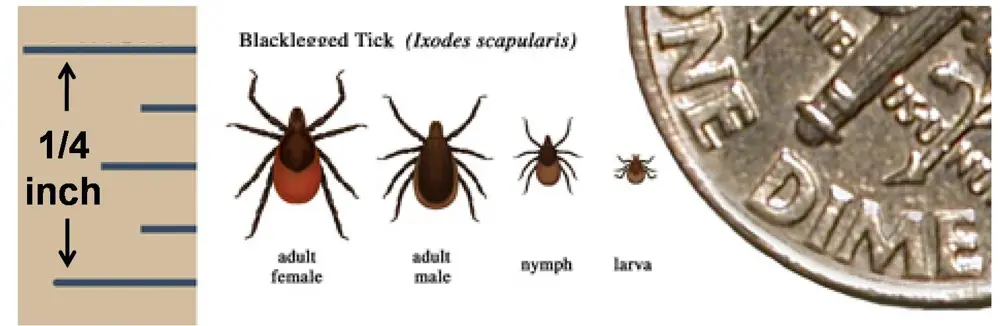
Deer ticks in Howard County yards live where the lawn meets the woods, wait in leaf litter and low plants, and are most active from spring through fall. That's the short version. If you live anywhere near Patapsco Valley State Park, the Middle Patuxent, the Columbia paths or just a strip of trees behind the fence, you've likely pulled one off a kid or a dog. Deer ticks, also called blacklegged ticks, carry the germs behind Lyme disease, and the Maryland Department of Health lists Lyme as the most common tickborne illness in the state, along with others like babesiosis and anaplasmosis.
A few habits cut the risk a lot, and most of them don't cost anything.
Where ticks wait in a typical yard
Ticks don't jump or fly. They wait on low plants and leaf litter for something to brush by. So the middle of a mowed, sunny lawn is fairly safe, while the shady edges are not. In Ellicott City, that edge is usually woods, a stream buffer or a common area, and deer pass through all of it. Mice and chipmunks feed young ticks, so woodpiles, stone walls and the space under a shed matter too.
Big wooded lots around Clarksville and the rural properties near Woodstock have long edges, and shaded yards in Dunloggin pick up ticks in the leaf litter under the canopy. Even townhouses that back onto woods in Columbia see them along the path. Check the dog's favorite spots too. If it sleeps under the deck or noses along the fence line, those are worth raking out and keeping trimmed. Deer ticks aren't the only kind around, either. The bigger American dog tick and the lone star tick also bite in Maryland, so remove any tick you find.
- The strip where lawn meets woods
- Leaf piles, ivy and ground cover
- Woodpiles, stone walls and the space under sheds
- Tall grass along fences and paths
Poppy seeds in June, adults while you rake
Nymphs are the stage to watch. They're about the size of a poppy seed and feed mostly in late spring and early summer, so they're easy to miss on skin. Adults are out in the fall and on mild winter days, which means raking leaves in November can still turn up ticks. The Maryland Department of Health says spring is the start of tick season but to keep checking right through the fall.
Their prevention list is straightforward: use an EPA-registered repellent like DEET or picaridin, wear long, light-colored clothes with pants tucked into socks in the woods, consider permethrin-treated clothing, shower soon after coming in, toss clothes in the dryer on high heat for ten minutes, and check yourself, the kids and pets.
Checking kids and dogs, and removing a tick
Ticks like warm, hidden spots. On kids, check behind the ears, along the hairline, under the arms, behind the knees and around the waistband. On dogs, run your hands over the ears, neck, armpits and between the toes after time near the woods, and ask your vet about tick prevention.
If one is attached, use fine-tipped tweezers, grab it close to the skin, and pull straight up with steady pressure. Wash the spot with soap and water, and write the day on the calendar so you can tell the doctor if anything comes up. Watch for a rash, fever, headache, joint pain or fatigue over the next few weeks, and call your doctor with any concerns.
Yard habits, and where treatment fits
Keep the grass short, rake leaves away from the play set and patio, and put a strip of wood chips or gravel between lawn and woods. Hang the bird feeder well out from the patio. The seed that drops under it feeds mice and chipmunks, and those are the animals young ticks feed on. Keeping mice out of the shed and woodpile helps more than people expect.
A licensed tech can treat the yard edge and shady beds during tick season, which lowers the number of ticks where your family spends time. It doesn't replace repellent or tick checks. Our page on tick and mosquito treatment in Ellicott City explains how a visit usually goes, and the same visit can look for yellow jacket nests in the stumps and edges.
Questions We Get
Do ticks survive a Maryland winter?
Yes. They shelter in leaf litter and come out on mild days. Adults can be active whenever it's above freezing.