Tick and Mosquito Control in Ellicott City, MD
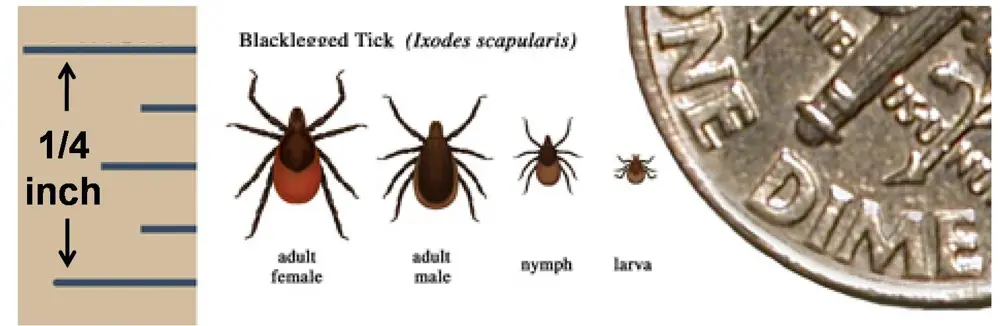
Ellicott City sits in a river valley full of woods, and most of the neighborhoods back onto some piece of it: Patapsco Valley State Park, a stream buffer, a common area, or just a stand of trees behind the fence. Deer use all of it. So do deer ticks, also called blacklegged ticks, which carry the germs behind Lyme disease. The Maryland Department of Health lists Lyme as the most common tickborne illness in the state and asks people to keep checking for ticks from spring right through the fall.
Mosquitoes are the other half of summer. The Asian tiger mosquito, the small black-and-white one that bites in daylight, came to Maryland through the used-tire trade, according to the Maryland Department of Agriculture, and it breeds in tiny amounts of standing water around houses. Tick and mosquito control is mostly a summer job, but it starts with a walk around the yard in spring.
Ticks live where the lawn meets the woods
Ticks don't spread out evenly. They wait in leaf litter and low plants in the shade, so the middle of a mowed lawn is fairly safe and the strip along the woods is not. If you're pulling ticks off the kids or the dog after yard work, or deer are bedding down at the back of the lot, the edges are the problem. Think leaf piles behind the shed, the ivy along the fence, and the path down to the creek.
Shaded lots in Dunloggin, the big yards near the McKeldin area in Marriottsville and homes along the Middle Patuxent in Clarksville get steady tick pressure. Mice feed young ticks, so keeping mice out of the woodpile and the shed helps more than you'd think. Our guide to deer ticks in Howard County yards goes through the season.
What tick spraying covers, and what it skips
The tech walks the property before anything gets sprayed. They're looking for the parts of the yard you actually use and the edges that touch them: lawn against woods, shady beds by the patio, the play set, the dog run. Standing water gets noted too: the gutter full of oak leaves, the sagging tarp on the firewood, the puddle that never dries by the downspout. On a big wooded lot, the treatment focuses on where people and pets spend time, not every acre. Most programs here run a visit every few weeks from April or May until the leaves come down.
Tell them about kids, dogs, vegetable gardens, fruit trees, a pond or beehives. A good tech explains the product, where it goes and how long to stay off treated areas. Treatment lowers tick numbers where it's applied. It doesn't replace repellent and tick checks, since deer keep bringing new ticks in. The price depends mostly on how much edge there is to treat and how many visits you want.
- The strip where lawn meets woods, and the leaf litter in it
- Shady shrubs and ground cover where mosquitoes rest during the day
- Woodpiles, stone walls and fence lines
- Containers and low spots holding water, pointed out for you to dump or fix
Tiger mosquitoes and the bottle-cap problem
Asian tiger mosquitoes don't need a swamp. A bottle cap of water, a clogged gutter, the saucer under a flowerpot or a toy left in the yard after a storm is enough. They stay close to where they hatch, so the ones biting you at the cookout were probably raised within a few houses. That's good news in a way, because dumping water around your own yard actually helps. The state's mosquito program says the same: clearing out old tires, buckets and cans cuts breeding a lot.
A treatment of the shady shrubs and ground cover where mosquitoes rest can cut down on bites, but no yard near the Patapsco or the Columbia lakes will be mosquito-free, and nobody honest will promise that. Howard County takes part in the Maryland Department of Agriculture's mosquito control program, which handles community-level spraying and surveillance. Yellow jackets often turn up on the same summer visit, so ask about nests in the lawn or wall if you've seen traffic in and out of a hole.
Questions We Get
If the yard is treated, can we skip tick checks?
No. Treatment lowers the number of ticks where it's applied, but deer keep bringing more in. Keep up repellent and checks.
When should tick treatments start?
Many homeowners start in spring, when nymphs become active. The Maryland Department of Health says to keep checking through the fall, so ask the tech about a schedule that runs that long.
What should I do after a tick bite?
Remove it with fine-tipped tweezers close to the skin, clean the spot and note the date. Call your doctor if a rash, fever or aches show up in the following weeks.
Serving Old Ellicott City, Dunloggin, Turf Valley, Valley Mede, St. Johns Lane, Columbia, Catonsville, Clarksville, Woodstock and Marriottsville, Elkridge.