Mouse and Rat Control in Ellicott City, MD
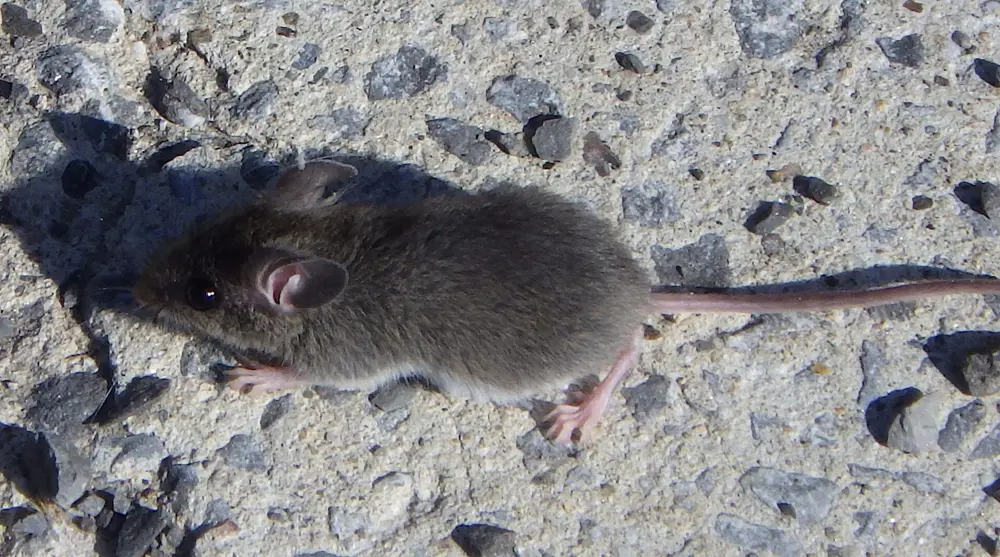
Mice are the fall call in Ellicott City. After the first cold nights in October, house mice and white-footed mice come in from the woods, the stream valleys and the yard, and they don't need much to get through. They'll fit through an opening you could barely push a dime into. If you want to get rid of mice for good, the trapping matters less than finding that gap.
Where they get in depends a lot on the house. In older stone homes and the granite buildings along Main Street, it's crumbling mortar, the old coal chute, and pipe holes drilled decades ago and never sealed. In newer houses, it's the garage door seal, the gap around the AC line, and the spot where the deck meets the house. Townhouses add one more problem: the mice in the unit next door.
How mice let you know they've moved in
Droppings are usually the first clue, small and dark, in a kitchen drawer or along the basement wall. Then the scratching starts, most often in a ceiling or wall after the house goes quiet. Other things worth mentioning when you call: shredded insulation or paper gathered into a nest, gnaw marks on food boxes or wiring, and greasy rub marks along the bottom of a wall where they run back and forth.
Rats leave bigger droppings, make louder noises and dig. Norway rats burrow along foundations, under sheds and decks, and in the banks of creeks and the river. If you're finding holes about the width of a fist by the foundation or the compost pile, it's probably rats, not mice.
Mouse removal starts at the foundation
Most visits start outside. The tech walks the foundation looking for open mortar joints, gaps under the sill, and holes around the dryer vent, the gas line, the hose bib and the cable. The garage door sweep gets checked, and so does the bulkhead door on older houses. Inside, they follow the droppings along the sill line, behind the stove, under the kitchen sink and up in the attic insulation. In Columbia townhouses and condos, the shared walls and the utility closet get a careful look.
Traps alone won't solve it if the gaps stay open, so mouse removal is usually two jobs at once. Snap traps or locked, tamper-resistant bait stations go where kids and pets can't reach them. Then the gaps get closed with materials mice can't chew, like steel mesh, mortar and metal flashing. Spray foam on its own won't hold them. A follow-up visit checks the traps and looks for new activity. While the tech is down at the sill line, ask them to watch for termite mud tubes on the stone too.
How long it takes depends on how many got in and how fast the gaps get closed. A handful of October mice in a newer Turf Valley or Clarksville house often goes quiet within two or three weeks. An old stone house with a lot of open joints takes longer. Price works the same way: size of the house, how much sealing it needs and how many follow-ups. The same gaps let stink bugs into the walls too, so it often makes sense to seal for both at once.
Rats near the Patapsco and along the creeks
Rats are less common than mice in most of Ellicott City, but they're around. Norway rats like the river banks, the low ground along the branches, and anywhere with steady food: dumpsters behind restaurants, compost piles, chicken feed and spilled birdseed. Businesses along Main Street in the historic district and older homes near the Patapsco in Elkridge see more of them than the newer subdivisions do. Rat work means more time outside, finding burrows and placing stations along fences and foundations.
If bait is used for either mice or rats, it belongs in a locked station set by a licensed tech, never scattered loose. For cleanup, don't sweep or vacuum dry droppings, since that stirs dust into the air. Wear gloves, open a window, wet the droppings and nest material with a disinfectant or bleach solution, let it soak a few minutes, then wipe it up with paper towels and bag it. Our guide to older stone foundations covers the sealing side in more depth.
Questions We Get
How come the mice come back every October like clockwork?
Usually because the way in was never sealed. Cold nights push them indoors and they use the same gaps every year. Closing them is what breaks the cycle.
Are bait stations safe if I have a dog?
Any bait goes inside a locked plastic or metal station that a dog's nose and a toddler's hands can't open. Tell us about the dog and the tech will place stations where it doesn't roam.
Can I just buy poison at the hardware store?
Loose poison is a risk to kids, pets and wildlife, and a mouse that dies in the wall leaves a smell you won't forget. If bait is used, it belongs in locked stations.
Serving Old Ellicott City, Dunloggin, Turf Valley, Valley Mede, St. Johns Lane, Columbia, Catonsville, Clarksville, Woodstock and Marriottsville, Elkridge.